I love hypothetical food questions (“What packaged food do you secretly love but refuse to admit to in foodie company?” For me, it would be Pillsbury crescent rolls. Mmmm.) Yes, I realize that makes me a major league geek.
One my favorite hypothetical food questions is having to choose one national cuisine to eat or cook for the rest of my life. First off, I’d be really bummed to have to choose in reality because one of my favorite parts of eating is variety. Even after traveling in Italy for just a week, enjoying some of the most delicious food on the planet, I come home jonesing for Thai or sushi, something with a savory spice. But, say I did have to choose. That I was stranded on a desert island with only one restaurant on it. A restaurant that was programmed by aliens to only be able to produce food from one country. Or something like that.
The obvious choices are French and Italian, two of the most celebrated cuisines in the world. Both have a tremendous amount of regional variation, which would make my lifelong habit less of a chore. Choosing between those two would be difficult. Italian desserts are pretty sorry, but many French dishes lack the vibrancy of their Italian counterparts. On my island, in the end, Italian would have the edge. I’d just have to smuggle in some pastries.
But there is a dark-horse candidate in this hypothetical food question race – Mexican. Like French and Italian, Mexican food features vastly different cuisines in its regions. And, its culinary influences are legion, from the indigenous ingredients to Spanish flavors, French technique, and Dutch cheese. I know I’ve tasted only the tip of the Mexican culinary iceberg, but it is glorious – the intricate moles from Oaxaca, the fish tacos from Baja, chicken pibil from the Yucatan. I love the deep spice blends and fresh-tasting ingredients. I love how it can be complex or simple. Give me a creamy avocado, tangy lime, and herbaceous cilantro with a pinch of salt and I am in heaven.
For the last year I’ve been looking for a taco recipe that I could make my own, that would satisfy my deep taco urges, with flavors that I could tell didn’t come from an Old El Paso taco spice envelope. I have Rick Bayless’s Mexican Everyday, and I’ve made a few of its taco recipes. But none of them have ever hit the proverbial spot.
When I saw Mark Bittman’s column in the Times on Wednesday about eating tacos in the Yucatan I hoped, I prayed. Could this finally be the taco I’d been looking for? His article included recipes for tacos with poblano strips and potatoes, tacos with mushrooms, and tacos with cactus leaves. Since I prefer mushrooms in moderation and cactus leaves lack the rich flavor I’m looking for I gravitated immediately to the Taco Filling with Poblano Strips and Potatoes. Bittman helpfully suggests adding a half-pound of Mexican chorizo for a non-vegetarian option. Since I live with two serious carnivores I opted to add the meat.
This dish was not difficult or time-consuming. But it also was not easy or fast. It took me about an hour, and I was glad that I had roasted, steamed and peeled peppers in culinary school. Ultimately, it is a nicely challenging weekend meal that is completely worth the effort. The potato, chorizo, pepper filling was balanced and flavorful. Per Bittman, I toasted the tortillas in a skillet until they were blistered and crisp, but still pliant. A little salsa verde (store-bought) on top added the perfect acidic finish.
I will still try new taco recipes, but I can rest easy knowing that there is at least one winner in my repertoire. (You know, these things can keep me up at night.) As for what one food to eat on the desert island, I’m still thinking about that.

Sunday, April 27, 2008


Friday, April 25, 2008
30 Minute Meals?
Since I have been thinking a lot about “fast” food recently, I was very interested in an article by Laura Shapiro published in Slate earlier in the week.
The Myth of the 30-Minute Meal focuses on Gordon Ramsay's new cookbook Gordon Ramsay’s Fast Food (also referenced in my Fast, Easy, and Simple post below). For the first half of the article, Shapiro makes the ridiculously easy case that Ramsay's American publishers don't expect most people who buy the book to actually cook out of it. Now, that's frequently the case for restaurant-driven, haute cuisine cookbooks like Thomas Keller's The French Laundry Cookbook. But, what does it say about us as a cooking nation that we won’t even cook out of a book promising easy weeknight dinners? Do the publishers think that we moved past the point where even whipping together a 30-minute meal is too much?
Shapiro suggests that the publishers are probably on to something. For people who don’t know how to cook, she says, the “stopwatch cuisine” cookbooks are nearly as unrealistic as the books like Keller’s. If you don’t know how to cook, fresh, beautiful, healthy dishes like Ramsay’s are likely to be enjoyed only vicariously through the book’s full-color photos.
So what of it? Since I haven’t used this book, it’s hard to comment directly, but I think Shapiro’s point is very made. Learning to cook is the best shortcut, the easiest way to really prepare good food fast. If I didn’t know how to make a pan sauce off the top of my head about a third of our weeknight meals would be pretty darn bland. If I didn’t know how to roast vegetables or make a vinaigrette, and had to fumble around for recipes, stopping every few minutes to reference something, dinner would rarely be ready in under a half hour.
The Myth of the 30-Minute Meal focuses on Gordon Ramsay's new cookbook Gordon Ramsay’s Fast Food (also referenced in my Fast, Easy, and Simple post below). For the first half of the article, Shapiro makes the ridiculously easy case that Ramsay's American publishers don't expect most people who buy the book to actually cook out of it. Now, that's frequently the case for restaurant-driven, haute cuisine cookbooks like Thomas Keller's The French Laundry Cookbook. But, what does it say about us as a cooking nation that we won’t even cook out of a book promising easy weeknight dinners? Do the publishers think that we moved past the point where even whipping together a 30-minute meal is too much?
Shapiro suggests that the publishers are probably on to something. For people who don’t know how to cook, she says, the “stopwatch cuisine” cookbooks are nearly as unrealistic as the books like Keller’s. If you don’t know how to cook, fresh, beautiful, healthy dishes like Ramsay’s are likely to be enjoyed only vicariously through the book’s full-color photos.
So what of it? Since I haven’t used this book, it’s hard to comment directly, but I think Shapiro’s point is very made. Learning to cook is the best shortcut, the easiest way to really prepare good food fast. If I didn’t know how to make a pan sauce off the top of my head about a third of our weeknight meals would be pretty darn bland. If I didn’t know how to roast vegetables or make a vinaigrette, and had to fumble around for recipes, stopping every few minutes to reference something, dinner would rarely be ready in under a half hour.
Tuesday, April 22, 2008
No raw meat or poultry
What we all like to cook and what we don’t like to cook is very personal. For me, the idea of meat from a can makes me feel ill. Heather doesn’t like to handle raw meat or poultry. So here’s a weeknight meal idea for you, Heather: Kung Pao Tofu from Eating Well magazine. I’ve made this a couple of times over the past few weeks. It’s fast, simple, and satisfying – a perfect weeknight meal. For me, the beauty of the recipe is that you can sub in any vegetable (or protein for that matter) that you like. Yesterday I used broccoli, carrots, and scallions. The week before it was broccoli and peppers. Once I made rice to accompany it; last night Thai noodles. The recipe requires only two pans, and yesterday it took me 32 minutes from start to table. Plus, tofu is healthy! And affordable! The only mildly tricky part might be finding the oyster sauce, but it was in the Asian section of my middle-of-the-road grocery store, so it shouldn’t be too hard to find. Let me know if you try it.
Oh, and Rosa loves the dish. There's nothing more heart-warming than hearing a two-year old demand, "More tofu! More tofu!"
Oh, and Rosa loves the dish. There's nothing more heart-warming than hearing a two-year old demand, "More tofu! More tofu!"
Sunday, April 20, 2008
Fast, Easy, and Simple
In culinary school I began thinking about the differences between fast or quick, easy, and simple. These adjectives seem especially prevalent right now in a raft of recent cookbooks including The Art of Simple Food (Alice Waters), Gordon Ramsay’s Fast Food, Nigella Express: 130 Recipes for Good Food, Fast; Quick Fix Meals: 200 Simple, Delicious Recipes to Make Mealtime Easy (Robin Miller); and virtually everything in the Rachael Ray oeuvre, if we're allowed to use a French word to describe anything about Rachael.
This isn’t an entirely new phenomenon, of course. I’m reading Richard Olney’s classic Simple French Food first published in 1974. But, I do feel that we’re near the crest of a wave in which fast food equals good food. “In today’s busy world” (as I’ve seen countless magazine articles begin) no one can be expected to dedicate significant time to feeding themselves or their families. We can talk more about that notion later on. For now, I'll stick with fast, easy, and simple.
Before I go on, let’s decide what these words really mean, courtesy of Dictionary.com:
Fast/Quick: done in comparatively little time
Easy: not hard or difficult; requiring no great labor or effort
Simple: not elaborate or artificial; not complicated
There is definitely a place for fast, or quick, food in my repertoire. When I get home at 7 PM, kiss Rosa, change clothes, chat with Anyah and make it into the kitchen I only have about 30 minutes to put a meal on the table. And, no question, that is not easy. It takes a conscious effort – some thinking and planning – to make good food fast. And for me the good part is pretty important. Each meal is an event to look forward to in my day, an opportunity to eat something satisfying. I am truly loathe to squander any of those chances, even if I only have a half an hour to cook. So, I am all for books and recipes that help busy people put worthwhile meals together. Nigella and Gordon are probably on to something.
The big question for me is the difference, if any, between “easy” food and “simple” food. I definitely prefer the latter adjective (which probably confirms my status as an Obama-loving elitist). “Easy” sounds like we’re slacking – like what we’re doing, cooking in this case, isn’t worth any effort, that we just want to get it over with and feed ourselves already regardless of the result. Like we’re opening cans and jars and taking shortcuts. “Simple” is a much more elegant adjective, conjuring up visions (at least for me) of warm breezes, green plants, and sunny tables laden with plates of beautiful, fresh food. In a nutshell, “simple” is Italian; “easy” is American. How would you rather eat?
So, simple food. How would I define it? First off, simple is not always fast. Simple to me is the foccacia bread from the Rebar cookbook Dave’s cousin Laetitia gave us. Six ingredients (including water), no equipment beyond a two bowls, a spoon, and measuring cups, and 15 minutes of prep time. From start to finish, including rising and baking, the bread requires about three hours. So it’s not fast, but it is simple, and utterly delicious: a golden, crackly crust slicked with tangy olive oil and a pillow-y, tender interior. Email me if you want the recipe.
Simple often means relatively few ingredients, although I would still consider a dish with a blend of five spices simple.
I think “simple” refers to technique and means just what the definition says, “not elaborate”. No fancy, multi-stepped, equipment-laden preparation – just a reasonable amount of prep time (not necessarily total cooking time) and straightforward technique, like roasting or sauteeing.
In the end, what I would argue is that the most satisfying fast meals are “simple”, as opposed to “easy”. This is what I strive for, even on busy weeknights. So the trick is to find fast, simple dishes! The holy grail. I will do my best to share some ideas.
This recipe for Spring Chicken & Blue Cheese Salad from Eating Well magazine is probably not a weeknight meal, unless you make the chicken in advance. But it was a lovely, simple weekend meal, light and flavorful. Note that the chicken took a good hour in my oven, even at a slightly higher temperature. I might roast it at 400 for 40 minutes, but of course it depends on how thick your chicken breasts are. The Creamy Blue Cheese-Tarragon Dressing was rich tasting but virtuous thanks to the yogurt. When I make it again I will cut the amount of honey in half. It was a little too sweet for my taste.
This isn’t an entirely new phenomenon, of course. I’m reading Richard Olney’s classic Simple French Food first published in 1974. But, I do feel that we’re near the crest of a wave in which fast food equals good food. “In today’s busy world” (as I’ve seen countless magazine articles begin) no one can be expected to dedicate significant time to feeding themselves or their families. We can talk more about that notion later on. For now, I'll stick with fast, easy, and simple.
Before I go on, let’s decide what these words really mean, courtesy of Dictionary.com:
Fast/Quick: done in comparatively little time
Easy: not hard or difficult; requiring no great labor or effort
Simple: not elaborate or artificial; not complicated
There is definitely a place for fast, or quick, food in my repertoire. When I get home at 7 PM, kiss Rosa, change clothes, chat with Anyah and make it into the kitchen I only have about 30 minutes to put a meal on the table. And, no question, that is not easy. It takes a conscious effort – some thinking and planning – to make good food fast. And for me the good part is pretty important. Each meal is an event to look forward to in my day, an opportunity to eat something satisfying. I am truly loathe to squander any of those chances, even if I only have a half an hour to cook. So, I am all for books and recipes that help busy people put worthwhile meals together. Nigella and Gordon are probably on to something.
The big question for me is the difference, if any, between “easy” food and “simple” food. I definitely prefer the latter adjective (which probably confirms my status as an Obama-loving elitist). “Easy” sounds like we’re slacking – like what we’re doing, cooking in this case, isn’t worth any effort, that we just want to get it over with and feed ourselves already regardless of the result. Like we’re opening cans and jars and taking shortcuts. “Simple” is a much more elegant adjective, conjuring up visions (at least for me) of warm breezes, green plants, and sunny tables laden with plates of beautiful, fresh food. In a nutshell, “simple” is Italian; “easy” is American. How would you rather eat?
So, simple food. How would I define it? First off, simple is not always fast. Simple to me is the foccacia bread from the Rebar cookbook Dave’s cousin Laetitia gave us. Six ingredients (including water), no equipment beyond a two bowls, a spoon, and measuring cups, and 15 minutes of prep time. From start to finish, including rising and baking, the bread requires about three hours. So it’s not fast, but it is simple, and utterly delicious: a golden, crackly crust slicked with tangy olive oil and a pillow-y, tender interior. Email me if you want the recipe.
Simple often means relatively few ingredients, although I would still consider a dish with a blend of five spices simple.
I think “simple” refers to technique and means just what the definition says, “not elaborate”. No fancy, multi-stepped, equipment-laden preparation – just a reasonable amount of prep time (not necessarily total cooking time) and straightforward technique, like roasting or sauteeing.
In the end, what I would argue is that the most satisfying fast meals are “simple”, as opposed to “easy”. This is what I strive for, even on busy weeknights. So the trick is to find fast, simple dishes! The holy grail. I will do my best to share some ideas.
This recipe for Spring Chicken & Blue Cheese Salad from Eating Well magazine is probably not a weeknight meal, unless you make the chicken in advance. But it was a lovely, simple weekend meal, light and flavorful. Note that the chicken took a good hour in my oven, even at a slightly higher temperature. I might roast it at 400 for 40 minutes, but of course it depends on how thick your chicken breasts are. The Creamy Blue Cheese-Tarragon Dressing was rich tasting but virtuous thanks to the yogurt. When I make it again I will cut the amount of honey in half. It was a little too sweet for my taste.
Sunday, February 04, 2007
*A Few Recipe Notes
*For a rich, delicious pasta dish that I think would impress anyone (even guests, regardless of what Julia says… and I don’t disagree with her very often), try this recipe for Orecchiette Bolognese with Chestnuts. I had been biding my time since it caught my eye in Food & Wine’s October issue, since roasted chestnuts aren’t one of my pantry staples. Luckily I had leftovers from my tarts (see below), and I figured it was about time to try this dish. As soon as I took the first bite I knew this pasta was something special. I think the trick is the layering of flavors – meat, mirepoix, herbs, then tomatoes and stock, all in stages. A generous portion of cream to finish didn’t hurt one bit.
*Last night I made pork tenderloin rubbed with a mixture of garlic, sage, olive oil, and salt and pepper. A recipe from Martha Stewart Living was the guide, but I realized while I was making it that you really don’t need instructions for something like this (duh). Mix any herb, olive oil, garlic, salt and pepper; rub it on a piece of meat; brown on the stove and roast at moderately high heat. Pretty basic and pretty reliable.
*Frankly, I would like dessert every night of the week (and possibly a few afternoons, as well), but I try to limit myself to the weekend. This way I feel like I’m showing restraint on the figure front, but I’m still able to experiment with new recipes on a regular basis – a perfect compromise. This weekend the simple milk chocolate pudding in February’s issue of Gourmet looked appealing. The list of ingredients was only seven items long, and the preparation could hardly have been easier – just right for a weekend where I wasn’t looking to outdo myself. The final product was a bit too thick for my taste, but, despite the use of milk chocolate, rich and smooth.
*Last night I made pork tenderloin rubbed with a mixture of garlic, sage, olive oil, and salt and pepper. A recipe from Martha Stewart Living was the guide, but I realized while I was making it that you really don’t need instructions for something like this (duh). Mix any herb, olive oil, garlic, salt and pepper; rub it on a piece of meat; brown on the stove and roast at moderately high heat. Pretty basic and pretty reliable.
*Frankly, I would like dessert every night of the week (and possibly a few afternoons, as well), but I try to limit myself to the weekend. This way I feel like I’m showing restraint on the figure front, but I’m still able to experiment with new recipes on a regular basis – a perfect compromise. This weekend the simple milk chocolate pudding in February’s issue of Gourmet looked appealing. The list of ingredients was only seven items long, and the preparation could hardly have been easier – just right for a weekend where I wasn’t looking to outdo myself. The final product was a bit too thick for my taste, but, despite the use of milk chocolate, rich and smooth.
Sunday, January 21, 2007
Culinary Magic?
As a rule, I am not one of those cooks fascinated by the chemical interactions occurring in my dishes or keen to practice molecular gastronomy in my tiny kitchen. I don’t have a copy of McGee to refer to, and I (sigh) tend to skip his articles in the New York Times Wednesday food section.
Primarily, I cook for the pleasure that my companions and I will receive when we eat. I also get a charge from the look of food – the perfect starburst in the flesh of a kiwi fruit, the gorgeous ruby redness of roasted beets, the golden glow of a tarte tatin.
But when the science of cooking is flat-out impossible to ignore, I am not just enamored of food – I am in awe of it. I love it when ingredients transform themselves before my very eyes, like egg whites suddenly metamorphosing into beautiful white foam. I had a moment like this last weekend when I made an impromptu dessert at the urgings of my husband. As noted before, I tend to be a slave to recipes. But since I hadn’t shopped for any particular dessert, I figured no recipe would match what I had on hand. So I decided to improvise and began foraging for ingredients. I found some piecrust dough in the freezer (I refuse to divulge whether this was homemade or Pillsbury), a fifth of a bag of semi-sweet chocolate chips and a bottle of roasted chestnuts. (As a side note, I adore roasted chestnuts, particularly their soft, crumbly texture.) Individual chestnut tarts were taking shape in my mind, with melted chocolate drizzled over, but clearly there had to be something creamy for the chestnuts to sit on. Then I remembered a “master” recipe for pastry cream in Dorie Greenspan’s Baking From My Home to Yours, a wonderful cookbook that my mom gave me for Christmas. I had never prepared pastry cream before and found the idea of it a little intimidating. But, I decided to give it a shot.
I had all the ingredients for the cream, save whole milk. I substituted 1% and hoped for the best. The procedure is simple. Boil milk in one saucepan; combine cornstarch, sugar, and egg yolks in another. When the milk starts to boil temper the egg mixture with a quarter cup or so of the milk before whisking in the rest. At this point, the recipe directed that I whisk the cream constantly over high heat for one to two minutes until the liquid thickened. So I did. I was whisking and whisking, and thinking that it probably wouldn’t work and maybe I should give up, when, suddenly, magic – or chemistry – happened. The thin egg/milk mixture became full, yellow, and amazingly creamy. I couldn’t believe my eyes. I had witnessed a miraculous culinary transformation thanks to my own hands.
The pastry cream was perfect, rich and delicious despite the substitution of 1% milk. The crust left a little to be desired (yes, Pillsbury), but laden with cream, chestnuts and chocolate it was pretty darn good.
I don’t know if I’ll remember the dessert itself for years to come. But I will remember the moment I tapped into the potential of milk, eggs, and a few other ingredients. To me this smacks less of hard science than of a beautiful and fortunate magic, but I’ll settle for believing it’s a little bit of both.
Primarily, I cook for the pleasure that my companions and I will receive when we eat. I also get a charge from the look of food – the perfect starburst in the flesh of a kiwi fruit, the gorgeous ruby redness of roasted beets, the golden glow of a tarte tatin.
But when the science of cooking is flat-out impossible to ignore, I am not just enamored of food – I am in awe of it. I love it when ingredients transform themselves before my very eyes, like egg whites suddenly metamorphosing into beautiful white foam. I had a moment like this last weekend when I made an impromptu dessert at the urgings of my husband. As noted before, I tend to be a slave to recipes. But since I hadn’t shopped for any particular dessert, I figured no recipe would match what I had on hand. So I decided to improvise and began foraging for ingredients. I found some piecrust dough in the freezer (I refuse to divulge whether this was homemade or Pillsbury), a fifth of a bag of semi-sweet chocolate chips and a bottle of roasted chestnuts. (As a side note, I adore roasted chestnuts, particularly their soft, crumbly texture.) Individual chestnut tarts were taking shape in my mind, with melted chocolate drizzled over, but clearly there had to be something creamy for the chestnuts to sit on. Then I remembered a “master” recipe for pastry cream in Dorie Greenspan’s Baking From My Home to Yours, a wonderful cookbook that my mom gave me for Christmas. I had never prepared pastry cream before and found the idea of it a little intimidating. But, I decided to give it a shot.
I had all the ingredients for the cream, save whole milk. I substituted 1% and hoped for the best. The procedure is simple. Boil milk in one saucepan; combine cornstarch, sugar, and egg yolks in another. When the milk starts to boil temper the egg mixture with a quarter cup or so of the milk before whisking in the rest. At this point, the recipe directed that I whisk the cream constantly over high heat for one to two minutes until the liquid thickened. So I did. I was whisking and whisking, and thinking that it probably wouldn’t work and maybe I should give up, when, suddenly, magic – or chemistry – happened. The thin egg/milk mixture became full, yellow, and amazingly creamy. I couldn’t believe my eyes. I had witnessed a miraculous culinary transformation thanks to my own hands.
The pastry cream was perfect, rich and delicious despite the substitution of 1% milk. The crust left a little to be desired (yes, Pillsbury), but laden with cream, chestnuts and chocolate it was pretty darn good.
I don’t know if I’ll remember the dessert itself for years to come. But I will remember the moment I tapped into the potential of milk, eggs, and a few other ingredients. To me this smacks less of hard science than of a beautiful and fortunate magic, but I’ll settle for believing it’s a little bit of both.
Sunday, January 07, 2007
Salmon a la Iolanda
I would be lying if I said I decided to marry my husband because of his mother’s cooking. But, let’s put it this way – it didn’t hurt. Dave’s parents immigrated to Montreal, Canada from a way-off-the-beaten-path village in southern Italy in the early 1960s. Iolanda was 16; Michele 26. They had been married for only a few weeks and known each other only a little longer than that. Theirs was not a passionate love affair, but an arranged marriage, and with it came the traditional expectations that were ingrained in rural Italian life. When Iolanda came to Canada she was expected to run the household and feed their growing family, which soon included three young sons. Iolanda cooked virtually every night, and practice has more than made perfect. In the dozens of meals I have now eaten in her home she has prepared gorgeous plates of antipasti; lasagna with homemade noodles; pasta in every shape, size, and sauce; lamb; turkey; beef; homemade sausages; pork roasts; stuffed chicken; tilapia, not to mention crackling baked potato fries, roasted peppers, asparagus, broccoli rabe, and on and on. I have never seen her refer to a recipe, whereas I am glued to them.
When we visited in November, Iolanda roasted salmon in a tangy, garlicky sauce. She had prepared it for us previously, and I had tried it at home over the summer. But I couldn’t get the proportions of the sauce just right. Watching her again, I re-familiarized myself with her method: Mince and mix parsley and garlic. Add generous amounts of fresh lemon juice and olive oil. Pat Dijon mustard on the salmon and douse the fish with the sauce. Bake for 20-30 minutes. Watching Iolanda put together this dish (in all of 10 minutes), I realized I hadn’t minced the parsley and garlic enough and that I had been too stingy with both the lemon juice and olive oil. At dinner that night, the dish was perfect – healthy and satisfying in a way that fish rarely is, to me anyways.
To remember the proportions, I took a few pictures of Iolanda making the salmon:


When we visited in November, Iolanda roasted salmon in a tangy, garlicky sauce. She had prepared it for us previously, and I had tried it at home over the summer. But I couldn’t get the proportions of the sauce just right. Watching her again, I re-familiarized myself with her method: Mince and mix parsley and garlic. Add generous amounts of fresh lemon juice and olive oil. Pat Dijon mustard on the salmon and douse the fish with the sauce. Bake for 20-30 minutes. Watching Iolanda put together this dish (in all of 10 minutes), I realized I hadn’t minced the parsley and garlic enough and that I had been too stingy with both the lemon juice and olive oil. At dinner that night, the dish was perfect – healthy and satisfying in a way that fish rarely is, to me anyways.
To remember the proportions, I took a few pictures of Iolanda making the salmon:


Monday, December 18, 2006
Tasting Club
I met Dina Cheney during the summer of 2005 just as she was beginning work on her first book. Dina is a freelance writer and chocolate tasting host, a graduate of culinary school and a charming, enthusiastic, thoroughly knowledgeable cook. This fall DK published her book Tasting Club, and since then Dina has been on the go sharing the tasting party gospel with harried hosts across the country. Instead of slaving away in the kitchen for hours preparing multiple courses before a dinner party that we will likely be too stressed to enjoy, Dina suggests we throw tasting parties centered on a specific food or drink category. Invite some people over, gather a few varieties of whatever food the party is focused on, eat, discuss and enjoy. Tasting Club is a meticulously researched primer on how to do just that. Each chapter focuses on a different tasting ingredient, from chocolate and apples to olive oil, honey, and cheese. In clear and engaging prose, Dina educates readers about the food they’re about to eat, suggests recipes for accompaniments, and offers tips on what to taste, look and smell for. The photographs are stunning and the book as a whole makes me want to throw a new tasting party every week!
Sunday, November 19, 2006
Wishing on a Banana
How many times do most adults taste a new food? Probably fairly rarely. After reading the blog entry below about watching my daughter try her first “solid” food, my friend Christine emailed me to say the story reminded her of a tradition she discovered while working in Russia in her mid-20s. Before tasting a food for the first time, her Russian friends made a wish. Christine had the pleasure of watching one friend make a wish before biting into a banana for the first time.
Naturally, tasting new foods happens more frequently the younger we are. Today, I try foods prepared in unique ways as often as possible. But I can’t remember the last time I tasted an entirely new food – something to strive for.
Naturally, tasting new foods happens more frequently the younger we are. Today, I try foods prepared in unique ways as often as possible. But I can’t remember the last time I tasted an entirely new food – something to strive for.
Tuesday, September 19, 2006
The Magazine that Changed My Life
Cooking Light changed my life. My mother gave me an issue in June 2002 to read on the airplane as I flew home from visiting my parents in Colorado. I opened the magazine as the plane taxied and hardly looked up until I had read the entire issue. The variety of featured ingredients astonished me, and the food in the photographs made my stomach rumble – not something I expected from “light” cuisine. I cornered page after page of recipes to try.
I suppose it is relevant to say here that in my pre-Cooking Light days, I didn’t cook very much and rarely tried anything new. My limited repertoire featured my mother’s (very good) chili, blueberry muffins, pancakes, chicken breasts and vegetables, and a variety of cookies and desserts. If anything, I was a more experienced baker than cook (which is not saying much, however). But I was hungry – a lot – and I lusted after good food.
The first recipe I prepared from that initial issue of Cooking Light was mango salsa, a rough assemblage of scallion, jalapeno pepper, salt, sugar, cilantro, lime and mango. Perfectly simple to prepare and utterly delicious, it was a flavor-popping marriage of sweet and savory extremes. My fate – as a food lover and food magazine fan – was sealed.
Reading the magazine and trying a recipe or two out of it, I began to believe that I could actually make good food myself, as opposed to always having to go out for it. I also evolved into a more adventurous eater, both at home and at restaurants, adding fresh figs, cilantro, and pomegranate molasses to my list of favorite ingredients. These were revelations that changed the texture of my life immeasurably – from where I travel to how I spend my spare time to how I feed my family. My day-to-day existence is simply more of a pleasure than it ever was before.
As noted in an earlier blog entry, my long-term relationship with food magazines is still going strong today. But Cooking Light was my first love. It may not be the most sophisticated of the culinary mags, but it was the one that seduced me first. For that, it will always have a special place in my heart and in my kitchen.
I suppose it is relevant to say here that in my pre-Cooking Light days, I didn’t cook very much and rarely tried anything new. My limited repertoire featured my mother’s (very good) chili, blueberry muffins, pancakes, chicken breasts and vegetables, and a variety of cookies and desserts. If anything, I was a more experienced baker than cook (which is not saying much, however). But I was hungry – a lot – and I lusted after good food.
The first recipe I prepared from that initial issue of Cooking Light was mango salsa, a rough assemblage of scallion, jalapeno pepper, salt, sugar, cilantro, lime and mango. Perfectly simple to prepare and utterly delicious, it was a flavor-popping marriage of sweet and savory extremes. My fate – as a food lover and food magazine fan – was sealed.
Reading the magazine and trying a recipe or two out of it, I began to believe that I could actually make good food myself, as opposed to always having to go out for it. I also evolved into a more adventurous eater, both at home and at restaurants, adding fresh figs, cilantro, and pomegranate molasses to my list of favorite ingredients. These were revelations that changed the texture of my life immeasurably – from where I travel to how I spend my spare time to how I feed my family. My day-to-day existence is simply more of a pleasure than it ever was before.
As noted in an earlier blog entry, my long-term relationship with food magazines is still going strong today. But Cooking Light was my first love. It may not be the most sophisticated of the culinary mags, but it was the one that seduced me first. For that, it will always have a special place in my heart and in my kitchen.
Tuesday, September 05, 2006
Recipe Roadtest: Parmesan-stuffed dates wrapped in bacon
I have a love of dates that goes back to a 10-day roadtrip through Morocco in 2000. We picked dates off a tree in Skoura and sampled several varieties from the vendors in Marrakech’s Djemaa el Fna. We ate the sticky fruit in numerous dishes, and learned to appreciate the different varieties.
I have a love of parmesan cheese that definitely does not date back to my childhood when we ate grated parmesan from the green Kraft canister. My affection, nay, adoration for parmesan, is actually a love of Parmigiano. This appreciation for the genuine article was sparked by my first-generation Italian husband and his immigrant parents.
I have a love of bacon that, really, shouldn’t need to be explained.
So, when I saw the recipe for parmesan-stuffed dates wrapped in bacon in the October 2005 issue of Gourmet three of my culinary stars were aligned. I prepared these little lovelies Saturday night when our friend Nicole came over for dinner. She had looked stricken earlier in the week when I asked her if she might like these as an appetizer. She breathlessly assured me that nothing on earth could sound better. I couldn’t agree more.
We were both rewarded for our anticipation. The gooey Parmigiano oozed into the sweet, sticky dates, while the crisp bacon acted as a smoky, salty counterpoint. I waited nearly a year after seeing this recipe to make the stuffed dates, but I didn’t wait nearly that long to prepare another batch. In fact, we still had leftover ingredients after our dinner party, and the dates were a memorable addition to yesterday’s Labor Day dinner.
I have a love of parmesan cheese that definitely does not date back to my childhood when we ate grated parmesan from the green Kraft canister. My affection, nay, adoration for parmesan, is actually a love of Parmigiano. This appreciation for the genuine article was sparked by my first-generation Italian husband and his immigrant parents.
I have a love of bacon that, really, shouldn’t need to be explained.
So, when I saw the recipe for parmesan-stuffed dates wrapped in bacon in the October 2005 issue of Gourmet three of my culinary stars were aligned. I prepared these little lovelies Saturday night when our friend Nicole came over for dinner. She had looked stricken earlier in the week when I asked her if she might like these as an appetizer. She breathlessly assured me that nothing on earth could sound better. I couldn’t agree more.
We were both rewarded for our anticipation. The gooey Parmigiano oozed into the sweet, sticky dates, while the crisp bacon acted as a smoky, salty counterpoint. I waited nearly a year after seeing this recipe to make the stuffed dates, but I didn’t wait nearly that long to prepare another batch. In fact, we still had leftover ingredients after our dinner party, and the dates were a memorable addition to yesterday’s Labor Day dinner.
Sunday, September 03, 2006
A First
We reached a food milestone at our home today – our daughter Rosa ate her first solid food. “Solid” is a bit misleading in this case, as her meal consisted of rice cereal thinned considerably with formula. However, she ate from a spoon, and while she seemed a little unsure about her role in the proceedings, Rosa continued to open her mouth for more after each bite.
Feeding Rosa, I thought about how this is her first step on a long journey. Every food she eats she will taste for the first time. Each flavor and texture will be new to her. She has her whole life ahead of her to be nourished by, delighted by, and obsessed with food – both positively and negatively. If she’s anything like her mother, Rosa will think about food during approximately 75% of her waking existence. Hopefully we can spare her that!
Feeding Rosa, I thought about how this is her first step on a long journey. Every food she eats she will taste for the first time. Each flavor and texture will be new to her. She has her whole life ahead of her to be nourished by, delighted by, and obsessed with food – both positively and negatively. If she’s anything like her mother, Rosa will think about food during approximately 75% of her waking existence. Hopefully we can spare her that!
Tuesday, August 29, 2006
The Perfect Weeknight Dinner
Take eight ingredients – and that includes salt and pepper – two pans, and 20 minutes, and for my money you can make the perfect end-of-summer weeknight dinner. I’m talking about steak in wine sauce on wilted greens, with corn on the cob on the side. I started with two thick top sirloin steaks, salted and peppered both sides and placed them in a hot, dry nonstick pan. I cooked them for eight minutes on each side, and then set them on a plate. Next, I added a teaspoon or two of olive oil to the hot pan, sautéed baby spinach for 30 seconds and then separated the greens onto two plates, topping the spinach with the steaks. Back at the stove (which in my kitchen is less than two steps away), I deglazed the pan with red wine, added less than a tablespoon of butter and voilà, had a delicious wine sauce to pour on the steak. The corn on the cob practically cooked itself and added a sweet counterpoint to the savory steak. All in all, a quick, satisfying supper for a rainy Brooklyn evening.
Monday, August 28, 2006
Recipe Roadtest - Wilted Frisée Salad w/ Beets & Manchego
Saturday night I prepared the Wilted Frisée Salad with Beets and Manchego from the September 2006 issue of Bon Appétit. This is a variation on the salade Lyonnaise I’ve grown to love, first at Artisanal, the delectable Big Apple restaurant devoted to all things fromage, and then from a cooking class I took a couple of years ago. Just thinking about a salade Lyonnaise makes my mouth water. It’s probably as far from health food as a salad can get: thick slices of bacon, crunchy croutons, and greens drenched in dressing. It’s deliciousness on a plate – with a poached egg on top. So when I saw the recipe, I decided enough time had gone by without indulging in a Lyonnaise-like salad. The addition of beets also intrigued me, since the ruby-red vegetables are a recent culinary discovery for me. Lyonnaise and beets… would it turn out to be an unexpected, yet delightful combination? Or an overwrought and ultimately futile play for novelty?
The answer: an overwrought and ultimately futile play for novelty. Now, full disclosure, I made two variations to the recipe, one of which I think ultimately served the salad and another that didn’t. Since we were eating the dish as a main course instead of an appetizer I added homemade croutons (a standard Lyonnaise ingredient that the recipe didn’t call for). It should go without saying that this is the variation that improved the salad, because, really, when don’t homemade croutons make something better? The variation that didn’t work as well was substituting romaine lettuce for the frisée, which I couldn’t find. I still wilted the romaine, but the salad’s texture, at least, certainly suffered.
But, romaine aside, the dish still had potential – bacon, eggs, dressing, croutons. Ultimately, it was the beets that did the damage. Think about it – does it seem like beets would complement a tangy, oily, crunchy, très français salad? The answer is no, and had I thought about it long enough I would have come to that conclusion.
Alas, this was one of those cases where I pondered too slowly and cooked too quickly. One good thing did come of it: I was reminded that a salade Lyonnaise is not a difficult dish to prepare and one that shouldn’t be banished from the table for too long a stretch.
I haven't tested this recipe for a classic salade Lyonnaise yet, but it looks just about right.
The answer: an overwrought and ultimately futile play for novelty. Now, full disclosure, I made two variations to the recipe, one of which I think ultimately served the salad and another that didn’t. Since we were eating the dish as a main course instead of an appetizer I added homemade croutons (a standard Lyonnaise ingredient that the recipe didn’t call for). It should go without saying that this is the variation that improved the salad, because, really, when don’t homemade croutons make something better? The variation that didn’t work as well was substituting romaine lettuce for the frisée, which I couldn’t find. I still wilted the romaine, but the salad’s texture, at least, certainly suffered.
But, romaine aside, the dish still had potential – bacon, eggs, dressing, croutons. Ultimately, it was the beets that did the damage. Think about it – does it seem like beets would complement a tangy, oily, crunchy, très français salad? The answer is no, and had I thought about it long enough I would have come to that conclusion.
Alas, this was one of those cases where I pondered too slowly and cooked too quickly. One good thing did come of it: I was reminded that a salade Lyonnaise is not a difficult dish to prepare and one that shouldn’t be banished from the table for too long a stretch.
I haven't tested this recipe for a classic salade Lyonnaise yet, but it looks just about right.
Sunday, August 27, 2006
Recipe Roadtest - Milk Chocolate Peanut Butter Sandwich Cookies

I subscribe to four food magazines: Cooking Light, Gourmet, Bon Appétit, and Eating Well. Each month I corner the pages of recipes I find appealing, and I try new dishes frequently – so frequently that my husband often complains we never get to eat dishes he likes twice. But it is still the case that there are significantly more recipes that catch my eye than actually make it on the dinner table. This weekend I tried to make up a little ground by preparing three new recipes – one main course, one dessert, and one cocktail. I’ll describe the dessert here and save the other two for future posts.
As soon as I saw the photo of the Milk Chocolate Peanut Butter Sandwich Cookies in the February 2006 issue of Bon Appétit, I knew they would eventually make it to my table. A pair of rich-looking chocolate chip cookies sandwiching a creamy peanut butter filling – what’s not to like? But would the final result live up to the mouth-watering photo?
The cookie sandwiches were simple to prepare. The chocolate chip cookies are put together like any other chocolate chip cookie – mix the dry ingredients, whisk the wet ones, and combine – with a few variations. The recipe called for peanut butter, confectioner’s sugar instead of white sugar, and only one egg, perhaps the difference that rendered the cookies crumblier than I expected (especially by the second day). Preparing the filling couldn’t have been simpler. I heated six tablespoons of heavy cream to boiling and then poured it over chocolate, more confectioner’s sugar, and peanut butter. The end result was quite good, “decadent” was my husband’s word – just the right amount of salty peanut butter to counteract the tooth-achingly sweet milk chocolate chip cookies.
So will this recipe become one that languishes in my notebook while new sweet temptations take center stage? Or will I make my husband happy by including these sandwich cookies in my regular repertoire? I think the latter. The chocolate-peanut butter combination is too good to pass up. Next time, though, I will use semi-sweet chocolate chips in place of the milk chocolate chips. The cookie sandwiches would be even better with less sweetness to distract from the peanut butter goodness.
Saturday, August 26, 2006
In Praise of Kitchen Tools
Before I started cooking a few years ago, I didn’t realize how many recipes called for citrus zest. What I did realize, soon after trying, was how frustrating it was to grate zest on my standard box grater. Yet, I did it for nearly four years – scraping my fingers, struggling to clean the grater, and ultimately capturing very little of the flavorful zest. But standing in Bed, Bath, and Beyond with a mom eager to buy me things, I knew exactly what I wanted – a Microplane grater. Since then, my cooking life has been transformed, and I don’t say that lightly. I now look forward to zesting. It is a pleasure to watch the thin threads of peel materialize effortlessly on the grater. Cleaning the tool requires only a quick rinse, and my dishes taste better – dare I say, zestier – than ever.
So what took me so long? It wasn’t that the Microplane was expensive, ditto the salad spinner and tongs – tongs! – I finally brought home. The answer is… I don’t know. Perhaps I’m still mentally stuck in a time when I have zero disposable income. Perhaps I feel like I have enough stuff and should be able to make due without more tools taking up room in my limited kitchen drawer space. Or perhaps I’m just lazy. But, after the resounding success of the Microplane grater, I resolve to be proactive, to quickly acquire the tools that will making cooking easier and my food tastier. Next on my list is an instant-read thermometer. No more turning sadly past beef, poultry, and pork recipes that require the handy implement. I am saying “yes!” to the instant read thermometer – the next tool to rock my kitchen world.
I’m sure I’ll pick it up soon.
So what took me so long? It wasn’t that the Microplane was expensive, ditto the salad spinner and tongs – tongs! – I finally brought home. The answer is… I don’t know. Perhaps I’m still mentally stuck in a time when I have zero disposable income. Perhaps I feel like I have enough stuff and should be able to make due without more tools taking up room in my limited kitchen drawer space. Or perhaps I’m just lazy. But, after the resounding success of the Microplane grater, I resolve to be proactive, to quickly acquire the tools that will making cooking easier and my food tastier. Next on my list is an instant-read thermometer. No more turning sadly past beef, poultry, and pork recipes that require the handy implement. I am saying “yes!” to the instant read thermometer – the next tool to rock my kitchen world.
I’m sure I’ll pick it up soon.
Monday, April 24, 2006
Meyer Lemon P.S.
Quite by accident, last night I discovered a concoction both deserving of the Meyer lemon and greatly enhanced by the fruit -- a classic gin and tonic. Not wanting to waste the last bits of the Meyer, I sliced a healthy wedge into my drink and was struck immediately at how perfect the fruit complemented it. Sweeter than my usual lime twist, but still acidic and bracing, the Meyer lemon is my new favorite garnish. Now, to convince the owners of NY bars that stocking Meyer lemons would be worth their while...
Sunday, April 23, 2006
Adventures in Ingredients -- Meyer Lemons
Since I started obsessively paging through cooking magazines like Gourmet, Bon Appetit, Saveur, and Cooking Light a few years ago, I have seen many references to Meyer lemons. Often they are suggested in lieu of the more widely available Eureka lemons; occasionally they are mandated. I have never taken the magazines up on the suggestion, nor the mandate, simply because I couldn’t find the fruit at my usual marketing haunts. But so often were the Meyers recommended that they began to take on a mythical status in my mind – an ingredient revered by recipe writers and food editors, an ingredient that would make an ordinary dish sublime.
Last week over dinner at Crispo my friend Jessica let it slip that a pal of hers in California had sent her a box of ten Meyer lemons. In fact she used a few of them in the pie she made me recently. Sadly, the lemons had all been used… or so Jessica said. As we left Crispo I spotted Balducci’s across the street and, we went in on a hunch that the renowned food emporium would carry the coveted citrus. Lo and behold, there were the Meyer lemons – my first sighting in the flesh! I was surprised by the sunny orange rind and the softness of the fruit. Jessica graciously bought two for me and I took my bounty home to contemplate what to cook.
According to Splendid Table, the Meyer lemon is a hybrid fruit – a cross between a lemon and an orange or a mandarin orange. The fruit originated in China and was brought to North America in 1908 by Frank Meyer, a plant explorer for the U.S. Department of Agriculture. Today the fruit grows primarily in California with a peak season of November through January, but often extending until April.
 So I got my hands on the Meyers just in the nick of time. Now, how to take advantage of the treasures? After a search on Epicurious, I chose the Meyer Lemon Buttermilk Pudding Cake, which had positive reader reviews and called for 1/3 cup Meyer lemon juice. I sliced one of the lemons horizontally, my knife easily sliding through the soft rind. If I hadn’t known better, I would have sworn I was about to juice an orange, for the flesh was even more orange than the rind. I smelled the fruit, and was rewarded with the frangrance of orange sherbet. A quick slurp of the juice confirmed my initial impressions. The Meyer tasted sweeter than a typical lemon – more like a sour orange or even a grapefruit. The Meyer lacked the straightforward, tangy kick of its yellow cousin, but released instead a subtler flavor that shifted in my mouth.
The Meyer Lemon Buttermilk Pudding Cake was tasty – but did it do justice to the elusive Meyer lemon? Or, put another way, did the Meyer lemon do justice to the cake? I’m not sure. I almost thought the cake would taste better with the zing of a regular lemon. But, I’m not ready to abandon Mr. Meyer’s lemon yet. Now that I know where and when to find it, I will continue to experiment with the food editors’ favorite fruit.
Last week over dinner at Crispo my friend Jessica let it slip that a pal of hers in California had sent her a box of ten Meyer lemons. In fact she used a few of them in the pie she made me recently. Sadly, the lemons had all been used… or so Jessica said.
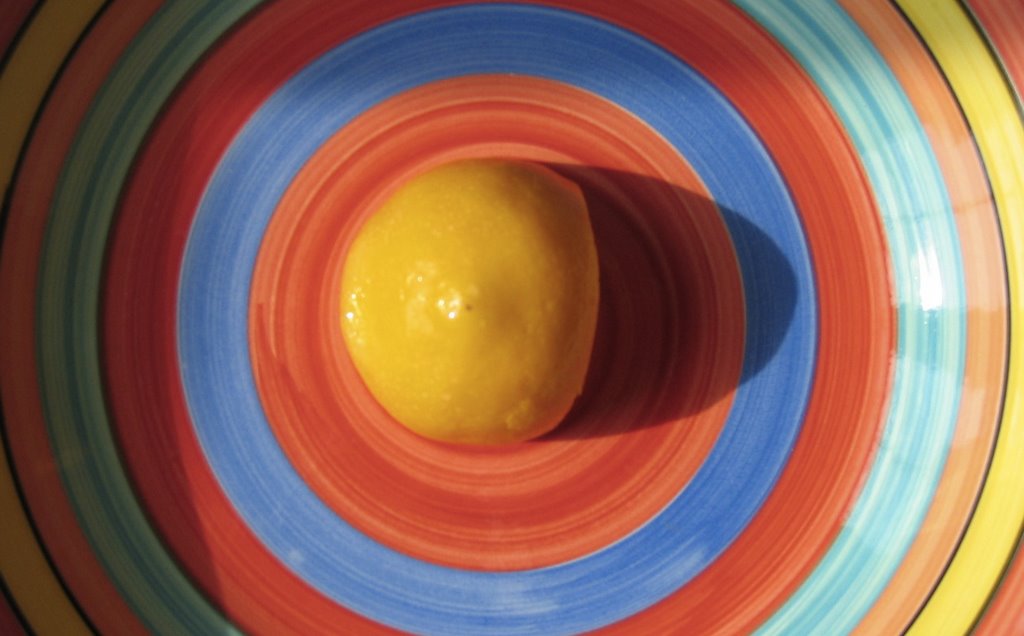 As we left Crispo I spotted Balducci’s across the street and, we went in on a hunch that the renowned food emporium would carry the coveted citrus. Lo and behold, there were the Meyer lemons – my first sighting in the flesh! I was surprised by the sunny orange rind and the softness of the fruit. Jessica graciously bought two for me and I took my bounty home to contemplate what to cook.
According to Splendid Table, the Meyer lemon is a hybrid fruit – a cross between a lemon and an orange or a mandarin orange. The fruit originated in China and was brought to North America in 1908 by Frank Meyer, a plant explorer for the U.S. Department of Agriculture. Today the fruit grows primarily in California with a peak season of November through January, but often extending until April.
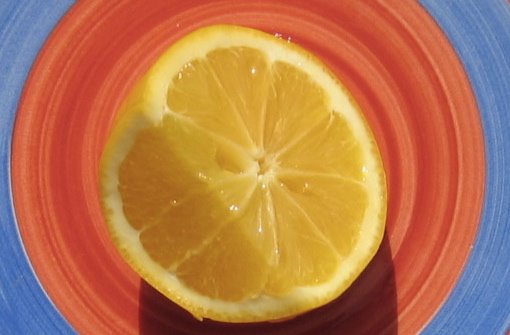 So I got my hands on the Meyers just in the nick of time. Now, how to take advantage of the treasures? After a search on Epicurious, I chose the Meyer Lemon Buttermilk Pudding Cake, which had positive reader reviews and called for 1/3 cup Meyer lemon juice. I sliced one of the lemons horizontally, my knife easily sliding through the soft rind. If I hadn’t known better, I would have sworn I was about to juice an orange, for the flesh was even more orange than the rind. I smelled the fruit, and was rewarded with the frangrance of orange sherbet. A quick slurp of the juice confirmed my initial impressions. The Meyer tasted sweeter than a typical lemon – more like a sour orange or even a grapefruit. The Meyer lacked the straightforward, tangy kick of its yellow cousin, but released instead a subtler flavor that shifted in my mouth.
 The Meyer Lemon Buttermilk Pudding Cake was tasty – but did it do justice to the elusive Meyer lemon? Or, put another way, did the Meyer lemon do justice to the cake? I’m not sure. I almost thought the cake would taste better with the zing of a regular lemon. But, I’m not ready to abandon Mr. Meyer’s lemon yet. Now that I know where and when to find it, I will continue to experiment with the food editors’ favorite fruit.
Wednesday, April 19, 2006
Conversations to Come...
People care about food for reasons as diverse as there are boxes of cereal on supermarket shelves. Some people care because it literally puts food in their mouths: they are farmers or they own restaurants, food shops, or cookware stores. Others are culinary historians, anti-hunger activists, accomplished amateur chefs, food stylists, advocates for organic produce, food writers, or professional cooks. Some people who care deeply about food are simply hungry and craving something remarkable to satisfy that hunger.
In La Noisette I will report back on my conversations with a diverse group of people who truly care about food. We will discover how their relationship with food affects their lives and how they put that passion into action – be it on a global, community, or household level.
In La Noisette I will report back on my conversations with a diverse group of people who truly care about food. We will discover how their relationship with food affects their lives and how they put that passion into action – be it on a global, community, or household level.
Monday, April 17, 2006
Food as Opportunity
“In societies torn by war, food is often the one chance people have to make anything in their day remarkable.” The journalist Scott Simon wrote that line in “Conflict Cuisine”, from the April 2006 issue of Gourmet. In the article he recounts some of the memorable meals he experienced while covering wars in Eritrea, Bosnia, and Kosovo. His observation struck me hard. While the difference between the hell of war and the “hell” of jobs, commuting, and day-to-day life are worlds apart, I believe that food gives people from all walks of life the opportunity to have something special in their day. Instead of microwaving a frozen dinner, a stay-at-home mother gently rests a poached egg over steamed asparagus for her lunch. Forgoing the usual supper of popcorn the retired couple spends 20 minutes in the kitchen making tangy tacos. Preparing delicious, memorable food doesn’t have to difficult, time-consuming, or out of reach. It is a simple pleasure, one that can make anyone’s day remarkable.
Subscribe to:
Posts (Atom)